
Minister of Fisheries and Ocean Policy Marianne Sivertsen Næss visits SEAM - witnessing firsthand how pioneering domestic projects are forging expertise virtually unmatched worldwide.
KARMØY, 22.09.26: During Maritime Week in Haugesund, leading regional industry players gathered to address policy frameworks directly with government officials.
Key cluster stakeholders, including DeepOcean, Østensjø, Solstad, Aibel, Salt Ship Design, and Zinus Power, joined systems integrator SEAM in a formal stakeholder input session outlining priorities for Norway’s upcoming national maritime strategy.
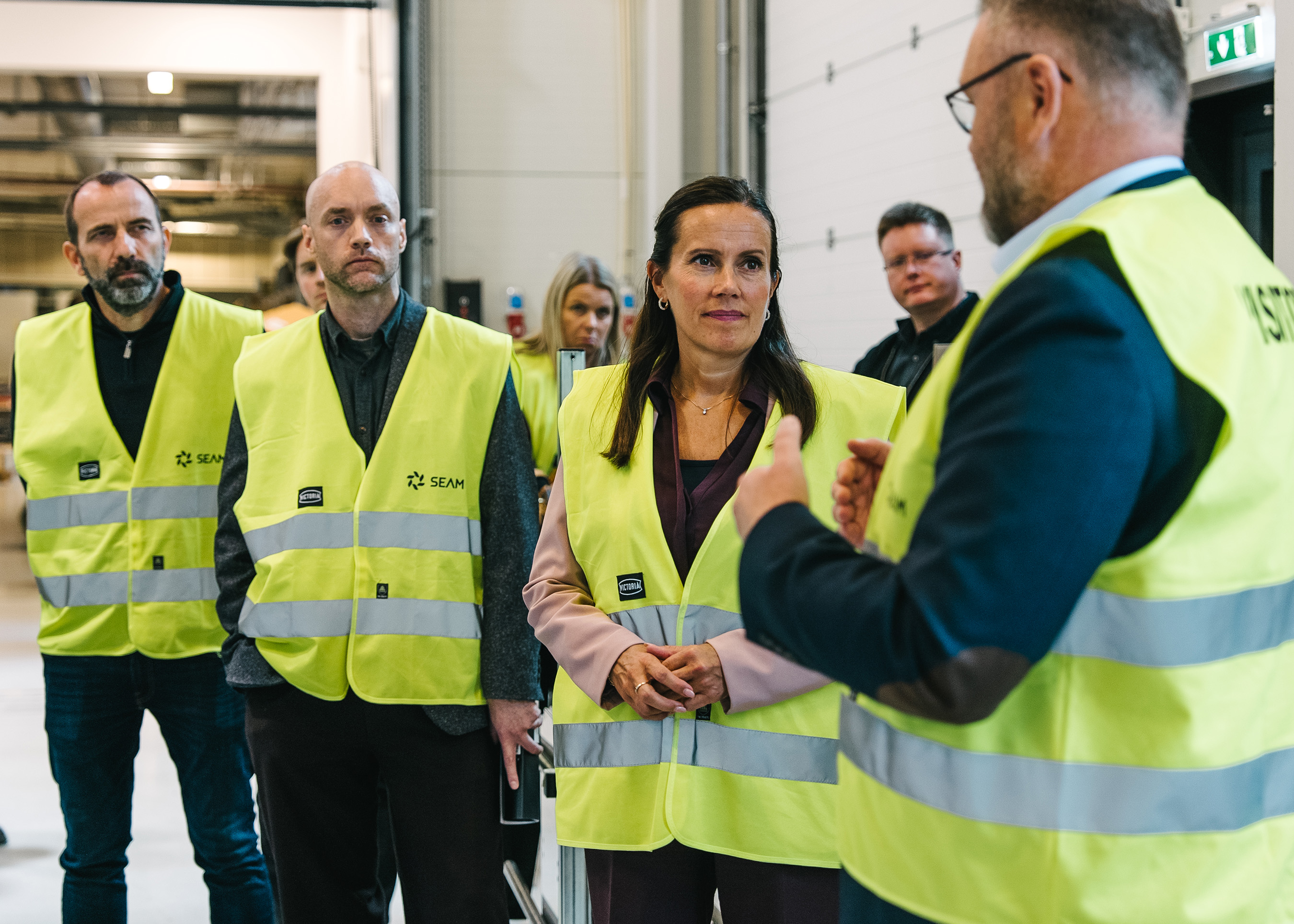
On Tuesday, September 22, the dialogue shifted from the conference rooms of Haugesund to the production floors at Husøy. Accompanied by the Department of Maritime Policy and Coastal Development, policy advisors and Member of Parliament Ruth Mariann Hop, Minister of Fisheries and Ocean Policy Marianne Sivertsen Næss received an in-depth briefing on the engineering demanded to deliver zero-emission operations at sea.
Megawatt-Scale Switchboards and Zero-Emission Delivery
Along the assembly lines at Husøy, massive multi-megawatt DC and AC switchboard lineups dominate the facility. The visiting delegation observed how advanced power electronics and proprietary automation software converge to form both the heart and the brain of modern vessels.
A central theme was the sheer breadth of active deliveries. Demonstrating modern coastal dry cargo vessels capable of running fully electric over extended voyages via multi-megawatt-hour battery systems, SEAM underscored that zero-emission propulsion technology has matured from experimental prototypes into robust commercial scale.
The Minister demonstrated keen engagement throughout the tour, posing probing and insightful questions regarding complex technical integration challenges, battery and power electronics architecture, and how current policy frameworks influence commercial investment appetite.
Expertise Born on the Shop Floor, Not in Textbooks
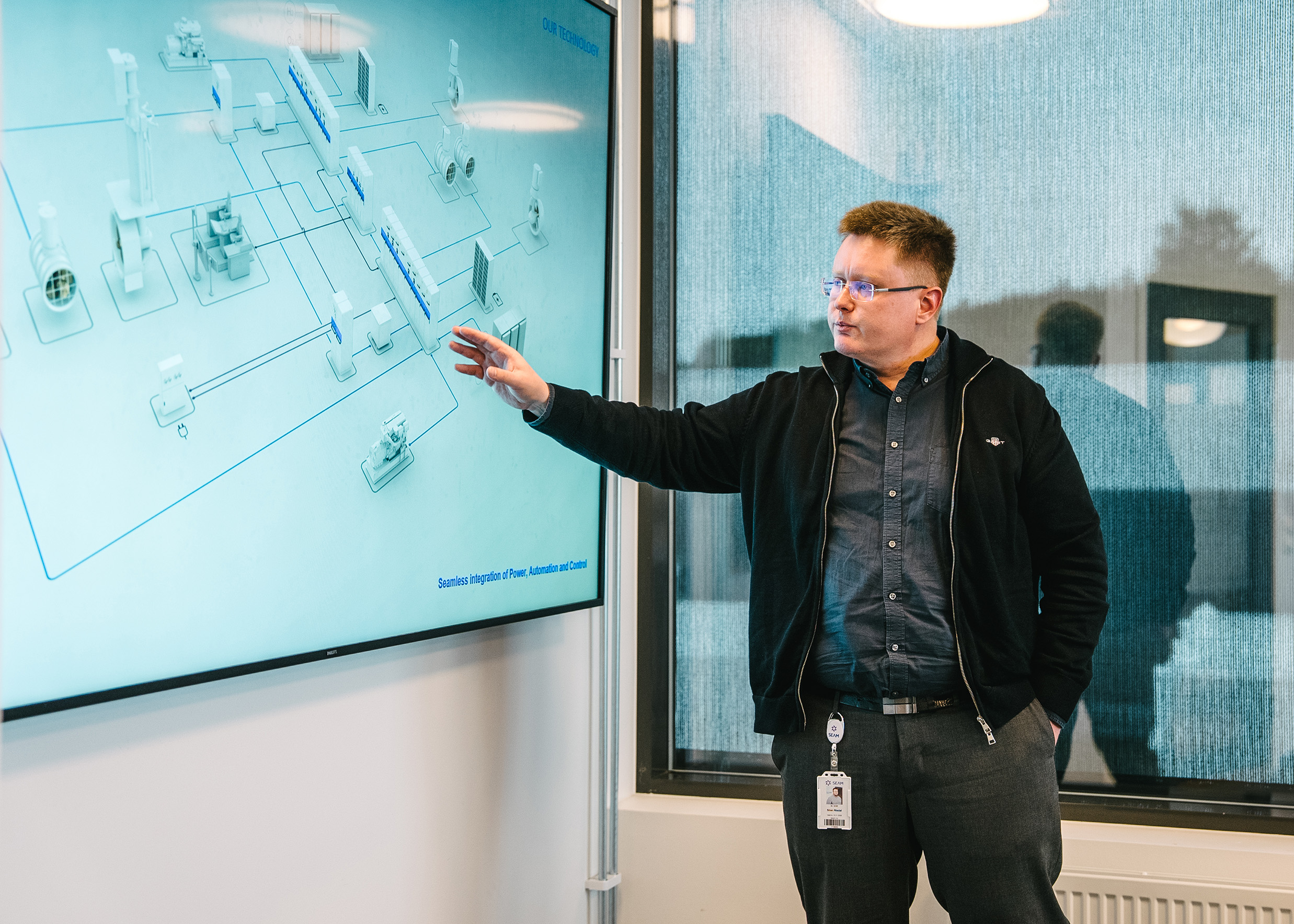
A core message conveyed to the Minister centered on the specialized knowledge hub cultivated at Husøy, across domestic project partners, and among fellow integrators in Norway’s maritime cluster. This caliber of systems engineering cannot simply be drawn from textbooks or academic institutions; it is forged directly on the shop floor through years of demanding pilot deliveries.
When SEAM exports its solutions abroad, the company is not only shipping hardware, switchboards, and drive packages - it is exporting hard-won practical experience and integration competence that, for now, remains almost unique to Norwegian system integrators.
At Husøy, this knowledge transfer is daily and deliberate: apprentices gain immediate, hands-on experience on complex live industrial contracts, while engineers design entirely new power architectures and validate them through real-time testing within the facility.
Concerns Over Hesitating Shipowners
Discussions following the production tour reflected broader industry apprehension regarding future momentum. SEAM leadership acknowledged the proven public-private synergy that originally positioned Norway ahead: stringent zero-emission public procurement criteria and strategic de-risking mechanisms through Enova served as the catalyst for domestic innovation.

However, the cautionary message delivered to the Minister was unmistakable: Norwegian maritime export capability depends fundamentally on an active, innovative home market. The absence of a decisive national roadmap and stable, long-term frameworks for domestic shipowners breeds hesitation.
If shipowners defer contracts for green newbuilds and retrofits, the pipeline of pioneering projects will dry up - eroding the very foundation that fuels Norway’s technological lead.
Minister Sivertsen Næss has consistently affirmed that the forthcoming maritime strategy aims to drive green transition while safeguarding coastal jobs and industrial value creation. The feedback from Karmøy provided the blueprint: the technology and engineering teams stand fully mobilized on the factory floor, but long-term predictability must be secured if Norway is to retain its global lead in zero-emission shipping.
We thank the Minister and the delegation for the engaging conversations during both the policy meeting and their visit to SEAM.

